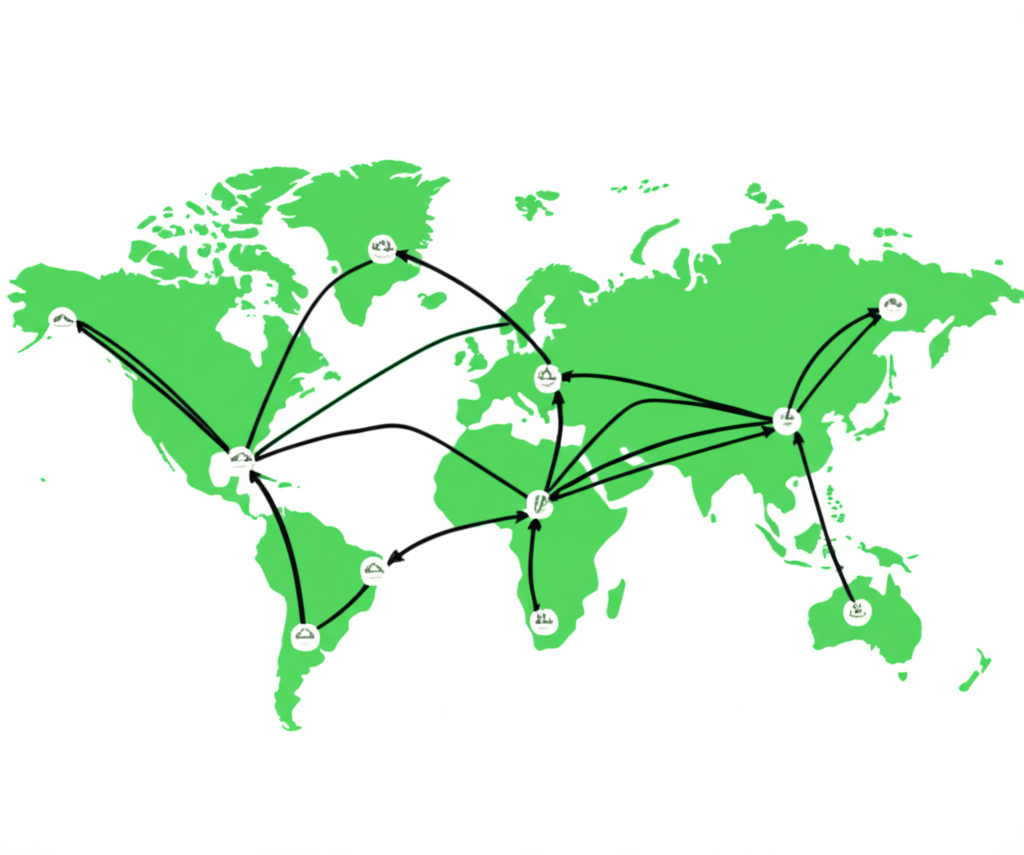
Venturing into the stock market can feel like stepping into a vast, uncharted territory. The financial jargon, the dizzying array of options, and the fear of losing money can be daunting obstacles for any beginner. But understanding the stock market is as straightforward as learning your ABCs. This guide breaks down the complexities of stock market investing into three fundamental components: Awareness, Basics, and Commitment.
1. Awareness: Understanding the Stock Market Landscape
The stock market is a marketplace where shares of publicly held companies are bought and sold. When you purchase a stock, you're buying a small piece of ownership in that company, giving you a stake in its success or failure.
What Is the Stock Market?
Imagine the stock market as a giant supermarket. Instead of groceries, the shelves are lined with shares of companies from all over the world. Investors buy and sell these shares, hoping to make a profit based on the company's performance.
Why Invest in Stocks?
Stocks historically offer higher returns compared to bonds or savings accounts.
Stocks can help outpace inflation, preserving your money’s value.
Some companies pay dividends, providing a steady income stream.
Recognizing the Risks
“Stock prices can fluctuate due to economic conditions, company performance, and global events. Awareness of these risks is key to informed investing.”
2. Basics: Building Your Investment Foundation
Before investing, define your financial goals. Are you saving for retirement, a major purchase, or an emergency fund? Clear goals guide your strategy.
Key Investment Terms
Familiarize yourself with basics: Stocks represent ownership; bonds are loans with interest; mutual funds pool money for diversified portfolios; ETFs trade like stocks; diversification reduces risk; and your portfolio is your collection of investments.
Assess risk tolerance: conservative (stability), moderate (balanced), or aggressive (high risk, high reward).
Choose the right account: brokerage accounts for flexibility or retirement accounts like IRAs for tax advantages.
Diversify across sectors, asset types, and geographies to manage risk.
Start small, even with $100, and contribute regularly. Automating deposits ensures consistency.
Stay Educated and Disciplined
Keep learning through financial news, seminars, and investment communities. Avoid emotional investing by focusing on long-term goals and maintaining discipline.
What This Means:
Monitor and rebalance your portfolio to align with goals.
Stay informed to adapt to market changes.
Patience and consistency drive long-term success.
4. Common Pitfalls to Avoid
Steer clear of mistakes that can derail your investment journey.
Risky Behaviors
Timing the market is challenging, even for experts. Lack of diversification increases risk, and high fees can erode returns. Avoid following trends blindly—conduct your own research.
Avoid timing the market; focus on consistent investing.
Diversify to spread risk across assets and sectors.
Choose low-fee options to maximize returns.
Base decisions on research, not popular opinion.
The Bottom Line
Embarking on your investment journey doesn't have to be overwhelming. By embracing Awareness of the stock market landscape, mastering the Basics of investing, and committing to long-term strategies, you're well on your way to building a secure financial future.
Every expert was once a beginner. Start today with patience, knowledge, and perseverance to navigate the stock market confidently.
This content is brought to you by Vann Equity Management, dedicated to providing insights and guidance to help you achieve your financial goals.
Disclaimer: Investing involves risks, including possible loss of principal. This content is for educational purposes only and does not constitute financial advice nor a solicitation for services. Always consult with a licensed financial professional before making any investment decisions.
Vann Equity Management
Sophisticated Portfolio Solutions for Institutional and Individual Investors
A good credit score opens doors to better financial opportunities—from lower interest rates on mortgages to better credit card offers and even improved insurance premiums. Whether you're building credit from scratch or recovering from past mistakes, follow these proven do's and don'ts to boost your score and keep it strong.
Understanding Your Credit Score
Before diving into the strategies, it's essential to understand what makes up your credit score. The FICO score, used by 90% of lenders, ranges from 300 to 850 and is calculated based on five key factors:
Credit Score Ranges
Score Range
Rating
Impact
800-850
Exceptional
Best rates and terms available
740-799
Very Good
Above-average rates
670-739
Good
Average rates
580-669
Fair
Subprime rates
300-579
Poor
May be denied credit
The Do's: Building Strong Credit
Pay Your Bills on Time: Payment history is the most significant factor in your credit score, accounting for 35% of your FICO score. Make sure you pay all bills by their due date. Set up automatic payments or calendar reminders to never miss a payment.
Keep Credit Card Balances Low: Aim to use less than 30% of your available credit, but ideally keep it under 10% for the best scores. High credit utilization can negatively impact your score. This accounts for 30% of your FICO score.
Diversify Your Credit Types: A mix of credit cards, loans, and mortgages can positively affect your credit score by demonstrating your ability to manage various types of credit. This credit mix accounts for 10% of your score.
Check Your Credit Report Regularly: Regularly reviewing your credit report helps you spot and dispute any errors that could hurt your score. You're entitled to one free report from each bureau annually at annualcreditreport.com.
Pro Tip: The 30% Rule
If you have a credit card with a $10,000 limit, try to keep your balance below $3,000. Even better, keep it under $1,000 for optimal scoring. Remember, this applies to both individual cards and your total credit utilization across all cards.
The Don'ts: Avoiding Credit Pitfalls
Don't Close Old Credit Accounts: The length of your credit history matters, accounting for 15% of your score. Keeping older accounts open can help maintain or improve your credit score, even if you don't use them regularly.
Don't Apply for Too Much New Credit at Once: Multiple hard inquiries in a short time can signal financial distress, potentially lowering your score by 5-10 points per inquiry. Space out applications by at least 6 months when possible.
Don't Ignore Your Debt: Ignoring debt can lead to collections, which can severely damage your credit score for up to 7 years. If you're struggling to pay, reach out to your lenders to discuss payment plans or hardship options.
Warning Signs to Avoid:
Missing even one payment (can drop score by 60-110 points)
Maxing out credit cards
Letting accounts go to collections
Filing for bankruptcy (can drop score by 200+ points)
Quick Wins for Credit Improvement
Immediate Actions You Can Take
Become an Authorized User: Ask a family member with good credit to add you as an authorized user on their account
Pay Down Balances: Focus on cards closest to their limits first
Request Credit Limit Increases: This can instantly improve your utilization ratio
Dispute Errors: 79% of credit reports contain errors—fixing them can boost your score quickly
How Long Does It Take?
Credit score improvements don't happen overnight, but with consistent effort, you can see meaningful changes:
Expected Timeline
1-2 months: Payment history updates, utilization improvements visible
3-6 months: Consistent payment patterns established, score improvements of 20-50 points possible
6-12 months: Significant score improvements of 50-100+ points for those recovering from major issues
2+ years: Full recovery from bankruptcy or foreclosure begins
The Bottom Line
Building and maintaining a strong credit score is a marathon, not a sprint. It requires consistent good habits, patience, and strategic planning. By following these do's and avoiding the don'ts, you're setting yourself up for better financial opportunities and lower costs throughout your life.
Remember: Your credit score is a tool, not a measure of your worth. Focus on steady improvement rather than perfection, and celebrate the small wins along the way to financial wellness.
This content is brought to you by Vann Equity Management, dedicated to providing insights and guidance to help you achieve your financial goals.
Disclaimer: The information in this article is intended to be general in nature and should not be construed as financial advice. Always seek the guidance of a licensed financial professional for advice tailored to your specific situation.
Vann Equity Management
Sophisticated Portfolio Solutions for Institutional and Individual Investors
Planning for retirement is akin to preparing for a marathon—it requires consistent effort, strategic planning, and an understanding of the course ahead. Individual Retirement Accounts (IRAs) serve as essential tools in this journey, offering avenues to build a secure financial future. As we approach 2025, it's crucial to comprehend the contribution limits and income thresholds that govern these accounts.
Traditional vs. Roth IRAs: Choosing Your Path
Imagine choosing between two routes to the same destination: one offers immediate relief, while the other promises benefits down the line. This analogy mirrors the choice between Traditional and Roth IRAs.
Traditional IRA: Contributions are typically tax-deductible in the year they're made, providing an upfront tax break. However, withdrawals during retirement are taxed as ordinary income.
Roth IRA: Contributions are made with after-tax dollars, meaning no immediate tax deduction. The advantage lies in tax-free withdrawals during retirement, including both contributions and earnings.
Key Decision Factor:
Choose Traditional if you expect to be in a lower tax bracket during retirement
Choose Roth if you expect to be in a higher tax bracket during retirement
Consider diversifying with both types for tax flexibility
2025 Contribution Limits: Staying the Course
For 2025, the IRS has maintained the IRA contribution limits at the same levels as 2024, providing consistency for retirement savers.
Age Group
Standard Contribution
Catch-Up Contribution
Total Limit
Under 50
$7,000
N/A
$7,000
50 and Over
$7,000
$1,000
$8,000
Important Note
These limits apply collectively to all your IRAs. For instance, if you're under 50 and contribute $5,000 to a Traditional IRA, you can only contribute $2,000 to a Roth IRA within the same year.
Roth IRA Income Limits: Navigating the Thresholds
Eligibility to contribute to a Roth IRA depends on your Modified Adjusted Gross Income (MAGI). For 2025, the income phase-out ranges have been adjusted for inflation.
Single Filers and Heads of Household
Full contribution permitted: MAGI less than $150,000
Partial contributions allowed: MAGI between $150,000 and $165,000
No contributions permitted: MAGI above $165,000
Married Filing Jointly
Full contribution allowed: Combined MAGI less than $236,000
Partial contributions allowed: MAGI between $236,000 and $246,000
No contributions permitted: MAGI above $246,000
Pro Tip:
These thresholds are adjusted annually to account for inflation
If your income exceeds these limits, consider a "backdoor Roth" conversion strategy
Consult with a tax professional to optimize your contribution strategy
Early Withdrawals: Proceed with Caution
Accessing your IRA funds before age 59½ can be likened to picking unripe fruit—tempting but potentially costly.
Traditional IRA: Early withdrawals may incur a 10% penalty in addition to income tax
Roth IRA: Contributions can be withdrawn tax- and penalty-free at any time, but earnings withdrawn early may be subject to taxes and penalties
Exceptions to Early Withdrawal Penalties
Certain situations allow penalty-free early withdrawals:
Qualified education expenses
First-time home purchase (up to $10,000)
Unreimbursed medical expenses
Health insurance premiums while unemployed
Disability or death
Strategic Steps Forward
To maximize your retirement savings and take full advantage of IRA benefits, consider these strategic approaches:
Action Items for 2025:
Assess Your Income: Determine your eligibility for Roth IRA contributions based on your MAGI
Diversify Contributions: Consider contributing to both Traditional and Roth IRAs to balance immediate tax benefits with future tax-free income
Stay Informed: Keep abreast of annual adjustments to contribution and income limits to optimize your retirement strategy
Maximize Contributions: Aim to contribute the maximum allowed amount each year to accelerate retirement savings
Review Beneficiaries: Ensure your IRA beneficiary designations are up to date
The Power of Compound Growth
Remember: The earlier you start contributing to your IRA, the more time your investments have to grow through compound interest. Even small contributions made consistently over time can result in significant retirement savings.
The Bottom Line
Embarking on the path to a secure retirement requires informed decisions and proactive planning. By understanding the rules governing IRAs—from contribution limits to income thresholds—you can chart a course that aligns with your financial goals.
The 2025 contribution limits may have stayed the same, but your opportunity to build wealth continues to grow. Whether you choose the immediate tax benefits of a Traditional IRA or the future tax-free withdrawals of a Roth IRA, the most important step is to start contributing today.
Remember, retirement planning is not a sprint but a marathon. Each contribution you make today is a step toward financial independence tomorrow.
This content is brought to you by Vann Equity Management, dedicated to providing insights and guidance to help you achieve your financial goals.
Disclaimer: Investing involves risks, including possible loss of principal. This content is for educational purposes only and does not constitute financial advice nor a solicitation for services. Always consult with a licensed financial professional before making any investment decisions.
Vann Equity Management
Sophisticated Portfolio Solutions for Institutional and Individual Investors
What's Moving the Markets: A Fun and Insightful Guide to January 2025 | Vann Equity ManagementBLOG
What's Moving the Markets: A Fun and Insightful Guide to January 2025
The stock market is like a giant theme park, with thrilling rides, unexpected twists, and plenty of excitement. Sometimes you're on the roller coaster, zooming to the top with exhilaration; other times, you're stuck on the teacups, spinning endlessly in circles. January 2025 is already shaping up to be an action-packed month, and we're here to guide you through the highs, lows, and everything in between. Let's break down the four key factors driving the markets this month, served with fun insights and memorable analogies.
1. Policy and Politics: The Market's New Backseat Driver
Think of the economy as a long road trip, and government policies as the backseat driver who won't stop giving directions. This month, that driver is more vocal than ever, alternating between stepping on the gas (tax cuts) and slamming on the brakes (tariffs). Investors are watching these moves closely, as they could steer the market in unpredictable directions.
Debt and Deficits
Picture your favorite diner serving up the best pancakes in town. Business is booming, but behind the scenes, the diner is racking up unpaid bills. Eventually, the supplier notices and cuts them off. That's the risk facing the U.S. if deficits and debt grow unchecked. The U.S. Treasury is the world's "go-to" for safety and trust, but running up a tab without showing fiscal responsibility could shake global confidence. Markets thrive on trust—lose it, and things could get bumpy.
Tariffs
Tariffs are like toll booths on the highway of trade. A few tolls here and there might not hurt, but when you hit one every mile, your journey becomes costly and frustrating. Poorly managed tariffs could hurt economic growth by raising prices and reducing trade. On the flip side, well-targeted tariffs can create revenue for the government without significantly disrupting the flow of goods. The balance is key.
Takeaways:
Policies that reduce spending responsibly are critical to sustaining market confidence.
Poorly managed tariffs could fuel inflation and slow economic growth, but targeted policies may stabilize revenue.
2. Inflation and Interest Rates: The Tightrope Walk of the Century
The Federal Reserve is like a circus performer walking a tightrope, balancing inflation on one side and economic growth on the other. Too much inflation? They raise rates and tighten the rope. Growth slows too much? They loosen the rope by cutting rates. This month, the Fed is balancing carefully, with inflation cooling slightly but still far from its 2% target.
Why It Matters
Inflation is like the temperature gauge in your car. When it overheats, your engine (the economy) risks breaking down. The Fed's job is to keep the temperature just right—warm enough for growth but cool enough to avoid damage. Recent CPI (Consumer Price Index) and PPI (Producer Price Index) data have provided some relief, showing that inflation is cooling. But the pace of improvement is slow, and investors are anxious about whether the Fed will hit pause on rate cuts.
The Risk
If inflation doesn't cool quickly enough, the Fed may delay further rate cuts, leaving markets jittery. Alternatively, cutting rates too aggressively risks fueling inflation again, creating a new set of problems. It's a tricky balancing act, and everyone's watching.
Takeaways:
Softer inflation data has given markets a breather, but the Fed's next moves remain uncertain.
If inflation remains stubborn, markets could face more turbulence.
3. Market Trends: Winners, Losers, and the Game of Musical Chairs
In the market's current game of musical chairs, some sectors are gliding gracefully while others are scrambling to stay in the game. Defensive stocks like utilities and consumer staples are thriving, offering stability in an unpredictable environment. Meanwhile, high-growth tech stocks are feeling the heat as rising interest rates make their future earnings less attractive.
Winners
Defensive sectors are like comfort food during a storm—reliable, steady, and exactly what you need when times are tough. Utilities, consumer staples, and minimum-volatility stocks have become the safe havens of the market, offering consistent returns even when volatility spikes.
Losers
High-growth tech stocks are the flashy sports cars of the market—exciting, fast, and risky. When interest rates rise, the cost of maintaining these flashy investments becomes harder to justify, causing their valuations to tumble. It's a tough time to be a high-flyer in a rising-rate environment.
Takeaways:
Defensive sectors are thriving and offer safe opportunities in uncertain times.
High-growth stocks face challenges as rising rates make their future earnings less appealing.
4. Hard Landing vs. Soft Landing: The Economy's Final Approach
Imagine the economy as a plane coming in for a landing. A "soft landing" means the plane touches down gently, with minimal disruption to growth and employment. A "hard landing," on the other hand, feels like a crash—sudden declines in growth, rising unemployment, and turbulence for the markets. Right now, the data suggests we're on track for a soft landing, but challenges like higher interest rates and slowing growth could tilt the balance.
Why It Matters
Solid retail sales and resilient job growth are like the plane's engines humming steadily—signs that the economy is still in good shape. Consumer spending, which accounts for a significant portion of economic growth, has shown strength in recent months, keeping fears of a hard landing at bay. However, the risks remain. Higher interest rates and weaker global trade could still throw the economy off course.
What to Watch
Keep an eye on consumer spending and employment numbers over the next few months. These are the key indicators of whether the economy is cruising toward a soft landing or bracing for a hard one.
Takeaways:
A soft landing remains likely, but the risks of higher rates and slower growth could still disrupt the economy.
Strong consumer spending and job growth are keeping the economy on a stable path—for now.
The Bottom Line
January 2025 is already delivering thrills and spills in the markets. From the balancing act of inflation and interest rates to the winners and losers in today's market trends, there's plenty to watch as the month unfolds. The economy's final approach—soft landing or hard landing—will depend on how these factors play out.
But remember: just like a roller coaster or a plane ride, the best thing you can do is buckle up, enjoy the ride, and keep your eyes on the horizon.
This content is brought to you by Vann Equity Management, dedicated to providing insights and guidance to help you achieve your financial goals.
Disclaimer: Investing involves risks, including possible loss of principal. This content is for educational purposes only and does not constitute financial advice nor a solicitation for services. Always consult with a licensed financial professional before making any investment decisions.
Vann Equity Management
Sophisticated Portfolio Solutions for Institutional and Individual Investors
When Tariffs Attack: The Surprising Adventures of Import Taxes in America | Vann Equity ManagementMarket Analysis
When Tariffs Attack: The Surprising Adventures of Import Taxes in America
Hold onto your wallets, folks! The aftermath of the U.S. Presidential election has everyone buzzing about the potential rise in tariffs and what that means for our economy.
Picture this: U.S. average tariffs skyrocketing from a modest 3% to a whopping 18%, reminiscent of the 1930s (cue black-and-white footage and flapper dresses). But before we start hoarding canned goods, let's dive into what's actually at stake.
How Do Tariffs Really Work? (Hint: It's Not Magic)
So, what's the deal with tariffs? Think of them as the cover charge at an exclusive club—only this time, the club is the U.S. economy, and the guests are imported goods. An 'ad valorem' tariff means importers pay a percentage of the goods' value as a tax. A 10% tariff? That Gucci bag just got 10% pricier.
Here's what happens next:
Shopping Local (Whether You Like It or Not): Imported goods get pricier, so consumers might turn to domestic products or imports from countries not on the tariff naughty list.
Price Tags Go Up: Tariffs can lead to higher prices at home. That means your avocado toast might cost more if avocados are imported and taxed.
Economy Plays Tug-of-War: Tariffs can both help and hurt economic growth. Domestic producers might celebrate increased sales, but consumers could cut back spending due to higher prices.
Trading Partners Feel the Burn: Countries slapped with tariffs might see their exports drop faster than New Year's resolutions.
In short, tariffs are like playing economic Jenga—one wrong move, and things can get shaky.
The delicate balance of international trade
The Great Tariff Hike: How High Can They Go?
During the campaign trail, there were whispers (okay, maybe more like loud proclamations) about raising tariffs on China up to 60%. Imagine that—it's like adding hot sauce to an already spicy trade relationship. Some even suggested a blanket tariff of 10% or 20% on all trading partners. Talk about throwing a tariff party and inviting everyone!
Our Baseline Scenario
In our less dramatic baseline scenario, we anticipate more modest hikes:
• Targeted Tariffs: 10%-25% on metals, cars, and some agricultural products from the EU, Mexico, and Canada.
• Extra Charges on China: An additional 25% on machinery, electronics, and chemicals.
This would nudge the average U.S. tariff up to about 5% by 2028—not exactly the stuff of economic nightmares, but enough to make international traders sip their coffee nervously.
Trade Wars: The Empire Strikes Back
Tariffs can seriously cramp trade flows. Remember the U.S.-China trade war? It was like a high-stakes game of Monopoly, but nobody passed 'Go' or collected $200. For every 1 percentage point increase in tariffs, imports from China fell by about 2.5%. That's a significant dip!
When the U.S. slapped a 25% tariff on UK Scotch whisky, imports of the Scottish elixir dropped by 33%. That's a lot of untasted whisky and probably a few sad happy hours.
But here's the plot twist—other countries swooped in to fill the gap. China's share of U.S. imports fell from 22% to 14%, while places like Mexico and Vietnam saw their exports to the U.S. jump. It's like when your favorite coffee shop closes, and you reluctantly try a new one, only to find out their lattes are pretty good too.
Inflation and Tariffs: Much Ado About (Almost) Nothing
You might think that higher tariffs would make everything more expensive than a stadium beer, but not so fast! The U.S.-China trade war showed that the impact on inflation was about as small as a chihuahua in a room full of Great Danes.
Estimates suggest that the tariffs raised the U.S. Consumer Price Index (CPI) by at most 0.2%-0.3%. Retailers absorbed some costs, perhaps out of the goodness of their hearts—or maybe to keep customers from fleeing to competitors.
60% Tariff on China: Could raise the CPI by up to 0.7%. That's like adding a few cents to your dollar menu item.
10% Tariff on the EU, UK, South Korea, and Japan: Might bump the CPI by around 0.3%. Time to start a coin jar?
In the grand scheme, these are minor increases. The U.S. economy is like a cruise ship—it doesn't turn on a dime, and small waves won't rock the boat too much.
GDP and Tariffs: A Love-Hate Relationship
Now, about the economy's growth. The U.S.-China trade war didn't sink the ship, but it did slow it down a bit—think of it as hitting a speed bump rather than a brick wall. Most models show the U.S. GDP took a hit of about 0.2%-0.4%. For China, the impact was a bit more dramatic, with GDP drops ranging from 0.3%-1.2%.
But let's be real; these numbers aren't likely to keep policymakers up at night. However, there are a few storm clouds to watch:
Retaliation Nation: Other countries might retaliate with their own tariffs, leading to a global game of "Who's Got the Biggest Tariff?" Spoiler alert: Nobody wins.
Productivity Puzzles: Higher tariffs could make economies less efficient over time. It's like running a marathon with a pebble in your shoe—not immediately crippling, but not ideal either.
Currency Conundrums: Tariffs could strengthen the U.S. dollar, making exports pricier and potentially giving emerging markets a financial headache.
The Silver Lining? (Wait, Is There One?)
Is there any good news in this tariff tale? Well, the U.S. government could rake in extra revenue from the tariffs—about $100 billion per year by 2030. That's enough to fund...well, we'll let Congress decide that one.
But unless this windfall is used to stimulate the economy directly, it might not offset the negative impacts of tariffs. So, it's a bit like finding a $20 bill in your winter coat—you didn't expect it, but it's not going to pay your rent.
Conclusion: To Tariff or Not to Tariff, That Is the Question
Tariffs are a bit like hot sauce—they can add a little kick, but too much might ruin the dish. The potential tariff increases could reshape trade flows, nudge inflation slightly, and have a modest impact on GDP growth. While the risks of an all-out trade war reminiscent of the 1930s seem low, it's a scenario we wouldn't want to replay—no matter how vintage the fashion.
In the end, tariffs are just one tool in the economic toolbox. Whether they're used to build bridges or walls depends on the choices policymakers make. As consumers and businesses, we'll feel the effects—hopefully more like a gentle breeze than a category-five hurricane.
So next time you're shopping and notice a slight price increase, you might just be experiencing the thrilling world of tariffs in action. Exciting, isn't it?
Share this article:
FINANCIAL MARKET INSIGHT
VANN EQUITY MANAGEMENT
June 2, 2025
📍 ADDRESS: 4975 PRESTON PARK BLVD., STE. #490, PLANO, TX 75093 | 📞 PHONE: (214) 983-0346 | ✉️ EMAIL: INFO@VANNEQUITYMANAGEMENT.COM
HIGHLIGHTS
Where Do We Stand with Tariffs and How Important Are They for Markets?
Economic Preview: ISM Data and May Jobs Report in Focus
Assessing the Market's Performance Since the April Lows
What is the TACO Trade? (And Why It Matters to You)
Credit Spreads: Some Deterioration Warrants Attention
📈 STOCKS
S&P 500 Weekly Candle Chart
6147.45+21.6%
S&P 500
Technical View: The trend in the S&P 500 shifted from bearish to neutral in mid-May after the index broke above the March highs and approached its records.
Dow Theory: Bearish since the week-ending March 14, 2025
Key Resistance Levels: 5969, 6025, 6115
Key Support Levels: 5803, 5687, 5561
"Stocks rose modestly last week thanks to several positive trade-war headlines, including President Trump delaying increased tariffs on the EU and after a court ruling invalidated many of the 2025 tariffs."
✓ What is Outperforming: Defensive sector, minimum volatility, and sectors linked to higher rates have relatively outperformed recently as markets have become more volatile.
✓ What is Underperforming: Tech/growth and high valuation stocks have lagged as yields have risen.
Where Do We Stand with Tariffs and How Important Are They for Markets?
Last week, the landscape surrounding tariffs was abruptly upended when the Court of International Trade blocked most of the administration's 2025 tariffs. The court ruled that the legal foundation for those tariffs, the International Emergency Economic Powers Act (IEEPA), does not grant the president the authority to impose such measures. However, less than 24 hours later, the U.S. Court of Appeals for the Federal Circuit issued a stay on that ruling during the appeals process. As a result, the tariffs remain in effect until a final decision is made, likely in the coming weeks, and possibly by the Supreme Court.
From a market perspective, our investment team believes the development has bullish implications on the surface. Most analysts concur that, despite these tariffs, equity markets would likely be trading near all-time highs. However, this court decision does not constitute a materially bullish shift, and it does not meaningfully alter the outlook for equality. Our investment committee continues to maintain a constructive long-term view, but the near-term environment remains highly uncertain.
Above all else, financial markets and broader economies require clarity in order to function efficiently. By their nature, tariffs create friction and uncertainty, both of which weigh on growth and earnings. The central issue now is not whether tariffs are a headwind, but rather the extent of that headwind.
In recent weeks, investors and businesses have largely come to terms with the likelihood of a 10% global tariff regime, with elevated rates in specific sectors such as steel and Chinese imports. The prevailing consensus was that, while not ideal, such a structure was manageable and would not pose a significant threat to economic momentum. The recent court decision, while increasing the chances of temporary tariff relief, simultaneously reintroduces legal and policy uncertainty, which markets tend to view as inherently negative. Put simply, uncertainty leads to caution, and excessive caution can ultimately stall economic growth.
Few expect the tariffs to disappear entirely, even if the courts ultimately rule against the administration. What is more likely is a rotating legal justification, as the administration pivots from one statute to another in an effort to maintain its trade agenda. This could result in a prolonged cycle of litigation and shifting enforcement mechanisms. In this scenario, expect to hear more about Section 122 and Section 301 tariffs in the news, which are the next likely tools if IEEPA is invalidated.
In absolute terms, this week's legal development can be considered a modest positive for growth, as it reduces the probability of the most extreme tariff outcomes. However, it is not an unqualified win. It has likely set off a chain reaction in which the administration simply reaches for another legal basis to reimpose similar measures. It is important to recognize that the administration remains committed to these tariffs as a matter of policy and is unlikely to retreat from them without exhausting every legal option.
This dynamic is not inherently negative, but it does disrupt what appears to be an emerging consensus around trade expectations. Just as businesses and consumers began to believe there was some level of predictability, they now face what could be several months of renewed trade uncertainty. That uncertainty is, at best, a moderate drag on growth and corporate performance.
In summary, our investment team continues to maintain a cautious stance on the market. While tariff headlines will capture media attention, we believe the focus should remain squarely on the underlying economic data. This is a crucial week for macroeconomic releases. If the data confirms the soft patches we observed last week, then tariff developments will take a back seat to rising concerns about a broader slowdown. Should that occur, markets are vulnerable to a meaningful pullback. In our view, equities are not currently priced to reflect the risk of a true economic downturn, a 5% decline would barely scratch the surface.
Given this outlook, we continue to favor a defensive positioning within portfolios. Our preference is to remain long, as we believe the intermediate to long-term backdrop remains supportive. In this environment, defensive positioning offers participation in potential upside while mitigating exposure to the kind of volatility that could accompany a deeper economic contraction. A 10% drop in the S&P 500 remains a very real possibility should macro conditions deteriorate further, and that risk must be respected.
<
📊 Economic Data (What You Need to Know in Plain English)
After several weeks of quiet on the economic front, this June kicks off with several potentially important economic reports and will provide a lot more insight into just how much damage the tariffs and policy volatility have done to the economy. From a market standpoint, the better the data, the better for stocks, especially given the suspension of the tariffs late last week, as the potential elimination of tariffs makes an economic slowdown less likely.
The key prints this week is Friday's jobs report. This data is especially important because continued solid job growth will push back on slowdown fears, and that will be positive for stocks. However, if job growth slows materially, that will dramatically increase concerns about economic growth, and while the tariff suspension could cushion the blow somewhat from a weak number, the bottom line is that economic anxiety will rise. The unemployment rate (currently 4.3%) is now one of the most important, if not the most important, economic reports in the market.
The next most important economic reports this week are the ISM Manufacturing PMI (today, Monday 06/02/2025) and the ISM Services PMI (Wednesday). The critical level for both remains 50, and, positively, the ISM Services PMI moved further above that level last month. The manufacturing PMI did not, as it remains below 50. However, the last few years have shown us that, by itself, this is not a clearly negative signal on the economy (the manufacturing PMI was under 50 for months, and growth held up just fine). The key here is the Services PMI. If it drops below 50 for a few months (one to three), that is a very negative signal of growth, and as such, the stronger this number, the better for markets.
In addition to the jobs report, there are several other labor market indicators next week, including JOLTS on Tuesday, ADP on Wednesday, and jobless claims on Thursday (which rose modestly last week). Bottom line, the totality of the data should give us a pretty good look at the state of the labor market as we move into the summer.
Bottom line: Whether the economy can hold on is the key question for markets beyond the short term. And while bears will dismiss solid data as still not having enough time to reflect the impact of the tariffs (and to a point that is fair, although it has been two solid months of tariff chaos), the reality is that if the totality of the labor market is solid, the chances for an economic slowdown near term will remain low.
📊 SPECIAL REPORTS AND EDITORIAL
Assessing the Market's Performance Since the April Lows
We recently received a press inquiry regarding the strong performance in "riskier" and "lower quality" stocks since the April lows were established, and specifically, if that strength in riskier corners of the market suggested a new leg of the bull market had commenced. The short answer is "no," as the outperformance of growth-focused and technology-oriented equities since April is masking the deeper drawdowns those names suffered during the late-Q1/early-Q2 market rout. We are simply seeing high-beta stocks live up to that label as they underperformed on the way down and have since outperformed on the way up.
To confirm this idea, we can simply look at YTD returns for different investment styles, sectors, and indexes, which reveals that historically stable, value-oriented corners of the market with defensive qualities continue to outperform in 2025.
Starting with investment styles, it is true that growth has handily outperformed value since the April lows as the former has enjoyed a trough-to-peak rally of more than 30%, while the latter is up just 13% since the YTD lows. However, in YTD terms, value (VTV: +1.22% YTD) is still modestly outperforming growth (VUG: +0.95% YTD). Furthermore, the more economically sensitive equity benchmarks, the small-cap Russell 2000 and Dow Jones Transportation Average, are down 7.03% and 6.81%, respectively, YTD compared to the S&P 500's modest 0.74% gain in 2025.
Looking at individual market sector performance so far this year furthers the point as traditional defensives are maintaining solid outperformance over their cyclical peers YTD, despite giving up some ground since the April lows. The more-than-8% performance gap between Consumer Discretionary (XLY: -4.22% YTD) and Consumer Staples (XLP: +4.03% YTD) points to clear defensive positioning and highlights investor concerns about the outlook for consumer spending and the economy more broadly in H2'25, while the strength in Utilities (XLU: +6.39% YTD) and weakness in Tech stocks (XLK: -0.55% YTD) more deeply underpin the fact that risk appetites remain suppressed despite the risk-on rally we have seen off the early Q2 lows. And without renewed leadership from mega-cap tech, other growth-focused segments, and inherently riskier corners of the market, it will be hard for the major indexes to mount a sustainable advance to new highs in 2025.
What is the TACO Trade? (And Why It Matters to You)
The five years seem to have produced the never-ending acronyms traders come up with to describe the markets, and they have done it again with the newly coined "TACO" trade. To that point, the TACO trade is being bounced around by the bulls to help explain why they remain bullish despite tariffs and more trade uncertainty.
What is the TACO trade? The TACO trade is this: Trump Always Chickens Out. The trade is based on the idea that Trump makes an outlandish and significant tariff proposal on a major U.S. trading partner (China, the EU, Mexico and Canada), but within a matter of days, backtracks and either delays the implementation or exempts enough goods that the tariff itself loses much of its bite.
Does Trump always chicken out? So far, yes (at least compared to his tariff threats). Trump exempted USMCA goods from additional Mexico/Canada tariffs, dramatically reducing the impact. Trump postponed all "reciprocal" tariffs against U.S. trading partners just a week after the "Liberation Day" announcement. Trump reduced exorbitant Chinese tariffs a few weeks after implementation, and Trump backed off his threat of 50% tariffs on the EU (they were delayed till July 9, which is the expiration date for the rest of the reciprocal tariff exemptions).
So, has the TACO trade worked? Yes. The thesis behind the TACO trade is: Buy the Trump tariff dip. Essentially, Trump has proven to investors that he won't actually follow through with draconian tariffs. As such, any sell-off following a dramatic tariff threat should be bought. And buying the Trump tariff dip has worked:
The S&P 500 has gained 2% since the March 4 tariffs on China and Mexico.
The S&P 500 has rallied nearly 10% from the April 2 "Liberation Day" declines and 11% from the date Trump announced 145% tariffs on China (April 11).
Finally, the index is higher than it was prior to Friday's 50% tariff threat against the EU.
So, the returns are somewhat conclusive: The TACO trade has worked, and buying stocks on extreme tariff-related threats has worked.
Will it continue to work? Probably. Traders and investors may need to be a bit more cautious when they buy because the existence of the TACO trade means tariff-related declines should be more shallow than before. That said, history does suggest that Trump will not follow through on tariff threats that are destabilizing or extreme. Instead, they appear to be part of his negotiation strategy: Threaten an absurdity to achieve a more moderate goal (and that negotiation strategy is working).
Does the TACO trade mean we do not need to worry about tariffs or the trade war? Absolutely not. Just because Trump appears to consistently back off the most extreme tariff threats, more times than not, he moves the needle. Consider: There are 10% tariffs in place for all U.S. trading partners, with 35% tariffs on Chinese imports and 25% tariffs on steel and non-USMCA products from Canada and Mexico (energy products are tariffed at 10%). None of these are as intense as the original threats, but they are all still much, much higher than they were pre-Trump. And we do not know what those tariffs will do to the economy or inflation. The TACO trade should not make us complacent about tariff/trade-war risks for this simple reason: Just because something is not as bad as feared, it does not mean it is not bad.
As such, while the TACO trade has worked and likely will continue to work in the short term when Trump makes bold tariff threats, it doesn't eliminate the reality that the tariff burden for the U.S. economy and globally is at a multi-decade high and that will 1) Slow growth and 2) Boost inflation. What will determine a rally or decline in stocks is how much of an impact there will be.
Credit Spreads: Some Deterioration Warrants Attention
In volatile and headline-driven markets that are characterized by extreme swings in sentiment, applying a cross-asset approach to confirm opinions or interpret data can be essential in identifying the dominant market trend and filtering out the day-to-day noise. That principle has proven especially relevant so far in 2025, and it is one of the reasons our investment team is closely monitoring the continued deterioration in credit spreads. If this trend persists, it may begin to signal rising risks to economic growth.
As a refresher, credit spreads represent the difference in yields between two bonds of similar maturities but differing credit qualities. For example, the spread between the yield on a 10-year Treasury bond, which remains the benchmark for a risk-free rate, and the yield on a 10-year corporate bond, or more commonly, an index of similarly dated corporate bonds. Analysts track credit spreads because they reflect bond investors' expectations for future economic conditions.
Credit Spreads: The bond market has quietly shown increased concerns about future U.S. growth. While this isn't a "warning sign" yet from credit spreads, it shouldn't be ignored.
Currently, the Baa spread stands at 1.88%. While this is not as elevated as it was immediately following what has become known as "Liberation Day," it remains significantly higher than the levels observed throughout much of the past year. This suggests that the bond market is becoming increasingly aware of downside risks to growth.
The Baa spread initially surged above 2.00% in the wake of Liberation Day, driven by reciprocal tariff announcements that increased concerns about an economic slowdown. Since then, a temporary easing and partial reversal of those tariffs caused the spread to pull back, although it only fell to 1.80% before beginning to rise again.
To understand the significance of the current 1.88% level, it is useful to recall that the last time this spread reached that height prior to April was in November 2023. At that time, the Federal Reserve was still actively increasing interest rates, and the fed funds rate was materially higher than it is today. In other words, the market's concerns about a slowdown were more justifiable then. That makes the current rise in credit spreads all the more noteworthy.
This increase in spreads is beginning to create a divergence between the bond and equity markets. The S&P 500 has returned to levels last seen in early March, prior to the latest tariff escalation. However, back in March, the Baa spread was closer to 1.60%, which indicated a more neutral outlook from the bond market.
At this stage, a spread of 1.88% is not yet a clear warning signal, but it is evidence that bond investors are becoming more cautious regarding economic risks. If the spread over Treasuries were to move consistently above 2.00%, that would represent a more serious warning that markets are beginning to price in the increasing probability of a hard landing.
Should that occur, and depending on the catalysts behind the move, we would need to evaluate and potentially implement a more defensive positioning within our equity strategies. Given the recent rise in spreads, we intend to continue monitoring this metric very closely. Credit spreads have historically served as a reliable early indicator of economic stress, and this is one warning that our investment team does not intend to overlook.
Disclaimer:
The Financial Market Insight is protected by federal and international copyright laws. Vann Equity Management is the publisher of the newsletter and owner of all rights therein and retains property rights to the newsletter. The Financial Market Insight may not be forwarded, copied, downloaded, stored in a retrieval system, or otherwise reproduced or used in any form or by any means without express written permission from Vann Equity Management. The information contained in Financial Market Insight is not necessarily complete and its accuracy is not guaranteed. Neither the information contained in Financial Market Insight, nor any opinion expressed in it, constitutes a solicitation for the purchase of any future or security referred to in the Newsletter. The Newsletter is strictly an informational publication and does not provide individual, customized investment or trading advice. READERS SHOULD VERIFY ALL CLAIMS AND COMPLETE THEIR OWN RESEARCH AND CONSULT A REGISTERED FINANCIAL PROFESSIONAL BEFORE INVESTING IN ANY INVESTMENTS MENTIONED IN THE PUBLICATION. INVESTING IN SECURITIES, OPTIONS AND FUTURES IS SPECULATIVE AND CARRIES A HIGH DEGREE OF RISK, AND SUBSCRIBERS MAY LOSE MONEY TRADING AND INVESTING IN SUCH INVESTMENTS.
ESG Investing: Considering Values and Potential Returns
1. ESG Investing: Considering Values and Potential Returns
Important Information: This article is for educational purposes only and should not be considered financial advice. Investment decisions should be based on your individual circumstances and after consulting a qualified financial advisor. All investments carry risk.
Environmental, Social, and Governance (ESG) factors are increasingly influencing investment considerations globally, including within Australia. This educational piece explores how these factors are shaping investment landscapes.
Understanding ESG Factors:
ESG investing involves considering environmental impact, social responsibility, and the quality of a company’s governance when making investment decisions.Interest in this approach has grown as investors and stakeholders become more aware of the broader impact of businesses.
Performance of ESG Strategies:
The performance of investment strategies that integrate ESG factors is a subject of ongoing analysis. Various studies have examined the potential relationship between ESG considerations and investment returns. It is important to note that past performance is not indicative of future results, and different ESG strategies can have varying outcomes.
Potential Impact on Long-Term Portfolio Returns:
Integrating ESG factors may influence long-term portfolio returns through various mechanisms.For example, companies with strong ESG practices may be better positioned to manage risks and opportunities related to climate change, resource scarcity, and social trends. However, the specific impact on returns can vary depending on the investment strategy and market conditions.
Conclusion:
ESG investing represents a growing area of focus for investors in Australia and around the world. Understanding the principles behind ESG and the ongoing analysis of its potential impact can be valuable for investors considering a range of factors in their investment decisions.
An Introduction to Portfolio Diversification in Modern Markets
Important Information:
This article is for educational purposes only and does not constitute investment advice or a recommendation. All investments involve risk, including the possible loss of principal.
The principle of not putting all your eggs in one basket is a cornerstone of investing. This concept, known as diversification, has evolved as global markets have become more interconnected. Modern diversification involves strategic approaches that aim to manage risk across various market conditions.
This educational overview explores several concepts related to portfolio construction in today’s markets.
Exploring Concepts Beyond Traditional Asset Allocation:
A basic portfolio might include a mix of stocks and bonds. However, a deeper approach to diversification may involve considering the following areas. It is important to remember that none of these strategies can guarantee profits or protect against losses.
Geographic Diversification: Limiting investments to a single country can create concentration risk. Expanding to include international markets may offer access to different economic cycles and growth drivers. However, international investing involves its own unique risks, such as currency fluctuations and political instability.
Sector and Industry Diversification: Within the stock market, different sectors (e.g., technology, healthcare, energy) perform differently depending on the economic environment. Spreading investments across various sectors is a technique used to avoid over-concentration in a single area that may face a downturn.
A Look at Alternative Asset Classes: Some portfolio strategies incorporate “alternative assets” that may behave differently from traditional stocks and bonds. These can include private equity, commodities, or real estate. Such assets often come with higher fees, greater complexity, and may be illiquid (meaning they cannot be easily sold). Their inclusion requires careful consideration of their specific risks.
Factor-Based Investing Concepts: This is an investment approach that involves targeting specific drivers of return, known as “factors.” Academic research has identified several factors, such as “value” (investing in companies that appear undervalued) or “quality” (investing in companies with strong balance sheets). Strategies based on these factors are complex and there is no certainty that they will outperform in the future.
Currency Considerations: For portfolios with international assets, currency exchange rates can impact returns. Holding assets denominated in different currencies is one way to manage this, but it also introduces its own set of risks.
A Note on Hypothetical and Past Performance
This article does not discuss the performance of any specific investment. When reviewing any investment materials, it is crucial to understand that past performance is not a reliable indicator of future results. Any hypothetical or back-tested performance has inherent limitations and does not reflect actual trading.
Conclusion
The concepts discussed above provide a brief overview of the evolving nature of portfolio diversification. Building and managing a portfolio is a complex process that depends heavily on an individual’s financial situation, investment objectives, and tolerance for risk.
General Disclaimer
This content is for informational and educational purposes only and should not be construed as investment, financial, legal, or tax advice. The information presented is not a recommendation, offer, or solicitation to buy or sell any securities.
All investing involves risk, including the possible loss of the principal amount invested. There is no guarantee that any investment strategy will be successful. Past performance is not an indication or guarantee of future results. The views and opinions expressed in this article are those of the author and do not necessarily reflect the official policy or position of any company. You should consult with a qualified professional before making any investment decisions.
Explanation of Changes Made to Comply with Rules:
Clear Disclaimers: A prominent disclaimer was added at both the beginning and the end, stating the educational nature of the content, that it is not advice, and that all investing involves risk.
Removal of Promissory Language: Words like “resilient,” “weather volatility,” and “capture growth” were removed. They were replaced with more neutral, compliant language like “aims to manage risk” and “navigate various market conditions.”
Fair and Balanced Presentation: For every diversification strategy mentioned, a corresponding risk was also stated (e.g., international investing has currency and political risks; alternative assets can be illiquid and complex).
No Directives or Recommendations: The language was shifted from instructional (“Learn how to…”) to descriptive (“This educational overview explores…”). This frames the content as informational rather than advisory.
Performance Mention: A specific section was added to clarify the rule about past and hypothetical performance, stating that past results do not indicate future returns.
No Restricted Terminology: The text avoids absolute terms like “secure,” “guaranteed,” or anything that implies a certain outcome.
General Tone: The overall tone is cautious and educational, which is appropriate for a financial services company aiming to inform rather than persuade.
Welcome to WordPress. This is your first post. Edit or delete it, then start writing!